Table of Contents
ToggleIn the modern, fast-paced digital age, both businesses and individuals have come to depend on the use of cloud services. With this convenience, however, comes danger. What is Cloud Security? It is the combination of practices, policies, and technologies that is set up to guard data, applications, and infrastructure in the cloud against cyber threats.
Heavy cloud security protection of sensitive information ensures compliance and fosters trust between users and providers. If your concern is how to protect your data and applications in the cloud, you will find the answers you need here.
If you are new to cloud technologies, you can explore this Cloud Computing Course in Chandigarh to build strong foundational knowledge.
What is Security in Cloud Computing, and why is it a Must?
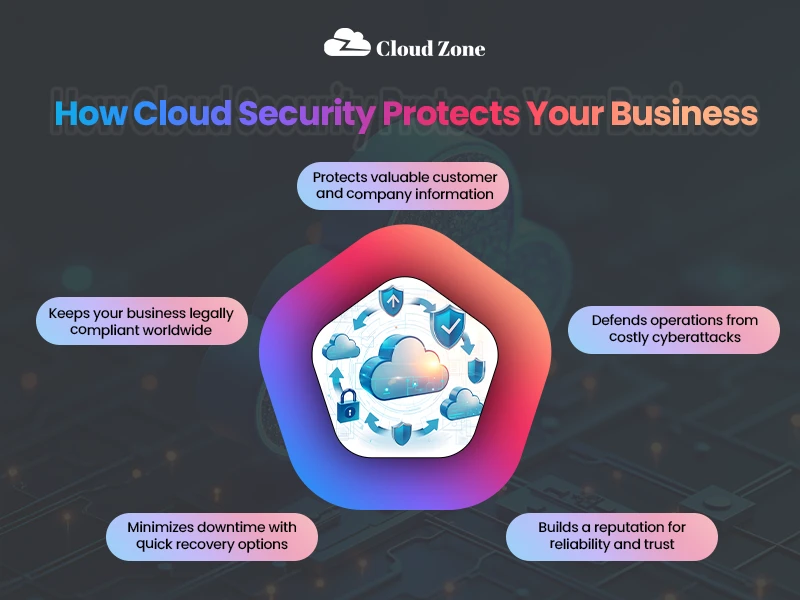
Cloud computing is not only flexible, cost-effective, and scalable, but it also presents vulnerability. Without proper cloud security, businesses are not entirely out of danger.
- Data breaches are capable of destroying sensitive information
- Cyberattacks can disorient business processes
- Regulatory non-compliance may result in fines and reputational damage.
What is security in cloud computing is a common question many beginners have, and it depends on how well businesses protect their information, their business systems, and their requirements to remain compliant.
A small startup with customer data on the cloud was the victim of a ransomware attack due to failure to adhere to basic security measures against ransomware. The case caused several days of operations to grind to a halt, demonstrating the importance of offensive security.
For organizations using DevOps tools, integrating secure CI/CD pipelines is key.
Learn more about Azure Devops CI/CD Pipelines better computing.
Core Elements
- Access Control and Identity Management: Users should only be able to access the cloud resources with authorization. Use Two-factor authentication (MFA) and role-based access (RBAC) in order to restrict access.
- Data Encryption and Protection: Encrypt data both in transit and at rest, especially sensitive data. Mask or tokenize critical information in order to decrease the overall impact of a breach.
- Threat Detection and Incident Response: Hack the cloud by monitoring suspicious cloud activity. Fast detection and action minimize the harm caused by the attacks on the cyber-environment.
- Audit and Regulatory Compliance: Be legislatively abreast. Incessant audits keep a cloud environment within compliance standards
- Backup and Recovery: Reliable backup is vital.
Explore solutions like how to back up cloud and its solution, or even the best cloud storage for business to secure your data.
Gain industry-recognized certification and build secure cloud environments
What is Cloud Access Security Broker (CASB)
A cloud access security broker is positioned between the user and cloud services as a guardian. It:
- Monitors cloud activity to be able to identify unauthorized access.
- Keeps sensitive data within the cloud.
- Enforces organizational policies consistently across numerous cloud platforms.
By understanding what is cloud access security broker, organizations are able to better manage a multi-cloud environment and reduce insider threats.
What Is Cloud Security Posture Management (CSPM)?
To understand what is Cloud Security Posture Management (CSPM), it is a must to know how it functions. It automates the constant checks regarding cloud configuration. CSPM tools:
- Determine real-time misconfigurations.
- Automatically patch against the usual cteS
- Grant insight into visibility on overall cloud security health
Those exploring CSPM along with cloud roles may also be curious about what cloud architects do in enterprise environments.
What is Cloud Computing Security?
Cloud security is not a one-time tool but a shared responsibility. Through this:
- Providers secure the infrastructure.
- Organizations protect their data, applications, and user access.
- Role clarification ensures that it does not allow loopholes in security
If you want to upskill in AWS security, check out the importance of AWS Security Training. Also, companies adopting AWS can leverage AWS certification training for deeper technical expertise.
Emerging Trends
- Zero Trust Security Models – Never trust devices blindly. Always check users and devices before granting access.
- AI and Machine Learning – Be able to predict and stop possible threats based on machine learning.
- Sovereign Clouds – Store data in specific regions to meet legal and regulatory requirements.
Those comparing major providers can also look into this detailed breakdown: Azure vs AWS vs Google Cloud.
Future of Cloud Security
The future of cloud security is one of more intelligent tools, more automation, and stronger protection systems. Companies are concentrating on:
- Stronger Encryption in the Future: Planning around quantum computers, which could crack today’s encryption, by creating new, safer encryption.
- DevSecOps (Built-in Security): Security will no longer be a step. It will be present at all levels of cloud system building and running.
- Cooperation and Collaboration: Businesses will share information in real time on new forms of threats to combat cybercrime in a better manner.
- Environmentally Conscious Security: Cloud providers will also plan energy-saving, environmentally conscientious data centers.
Cloud Security
With the passage time, the face of cloud security will have changed a lot compared to now. Those working in the field are sure of such changes as:
- Zero Trust Everywhere: Zero Trust security will be deployed in firms of all sizes, where no user or device is trusted by default.
- Artificial Intelligence to Accelerate Protection: Artificial intelligence will scan and alert on threats at all times, rectifying them in mere seconds, rather than hours.
- Global Security regulations: Governments will issue universal regulations of cloud security, particularly the regulation of privacy and data storage location.
- New Cloud Security Roles: Roles such as Cloud Security Architect or AI Threat Analyst will be a normal part of the industry, like DevOps engineers are now.
If you’re preparing for future roles, you can explore training like AWS Certification or GCP Courses Online to stay ahead.
Practice real cybersecurity scenarios and cloud defense
New Perspectives
- Human Factor in Cloud Security: Even the best secure cloud infrastructure may collapse due to indifference on the users’ part. Training and awareness among employees are a great tool to abate risks such as phishing and inadvertent leakage of data.
Here, women professionals are also making a huge impact. See more: Cloud Azure training opportunities for women.
- Multi-Cloud Security: Most organizations currently have more than one cloud provider. Security across such platforms is not easy, but very important to manage. It is easier and more reliable to use common rules, centralized monitoring, and automation.
- Security Tools for the Cloud-Native Environment: Cloud-native tools are developed to be used in direct cloud applications. They have security as a starting product and not a finishing product. This assists in resolving issues in the early stages and keeps applications safe as they develop.
- Secure, Real-time Threat Intelligence Exchange: The companies will be able to exchange information concerning a new threat in real time. This also enables others to study fast and prevent the same assault. A collaborative effort makes the cloud safer for everyone.
- Environmental and Compliance D implications: Cloud security must not go against laws, and support the environment. Data centers are equipped to be safe and environmentally friendly. This assists companies in fulfilling privacy regulations and lessening their carbon footprint.
- Cloud and DevOps expertise: Individuals who venture into this career are required to have good technical abilities. An understanding of security basics and DevOps tools can give one numerous career opportunities.
You can explore:
- What are the technical skills required for a DevOps engineer
- What are DevOps tools
Also, learners can choose GCP courses online or study Google’s pricing models.
Best Practices to Enhance Cloud Security
- Regularly patch and update the cloud.
- Employ encryption / MFA / password policies.
- Educate and train workers on the threats of cloud security and practices to keep safe.
- A regular audit is performed to find any weaknesses.
- Enhance an effective incident response strategy

Conclusion
What is Cloud Security? It’s an essential shield protecting data, applications, and infrastructure in cloud environments. Businesses can utilize proactive security measures to prevent breaches, comply with regulations, and maintain their customers’ trust. In conclusion, there are no more options when it comes to cloud security. To conclude, it is the prerequisite of any institution that is striving to be secure and successful in the online environment.
For more hands-on learning, you can start with cloud-native app development and expand into advanced training, such as AWS, Azure, and Google Cloud.
Secure your cloud today! Contact our cloud security experts at 09988821983 to design a tailored strategy that protects your business and maximizes your cloud potential.

Sukhamrit Kaur
Sukhamrit Kaur is an SEO writer who loves simplifying complex topics. She has helped companies like Data World, DataCamp, and Rask AI create engaging and informative content for their audiences. You can connect with her on LinkedIn.