Table of Contents
ToggleIntroduction
Have you ever wondered how development teams can effectively handle code without locking email chains, conflicting versions, and lost updates? This is the Bitbucket Guide, where you can discover how to use Bitbucket to ensure efficient collaboration, superior integrations, and intelligent workflow automation.
By the end of this article, you will know what is Bitbucket, how to clone from a dev branch in Bitbucket, how to create a branch in Bitbucket to push code, learn is Bitbucket down, control access, integrate with tools such as Jira, and make the best use of Atlassian Bitbucket.
Why Choose Bitbucket
Bitbucket is not just any other repository hosting service, but a collaboration tool that is designed to be secure and productive. The teams can ensure the quality of the code and deal with numerous contributors in various projects.
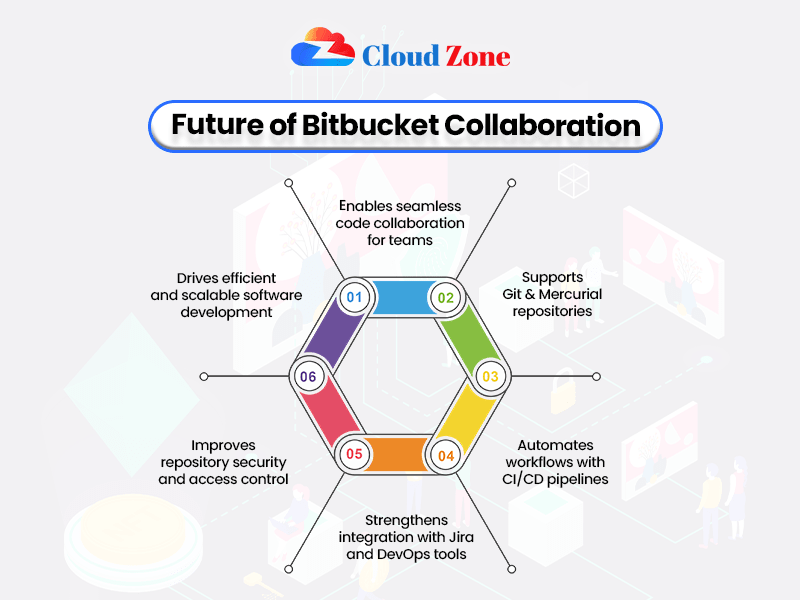
- Git and Mercurial repositories are supported.
- Offers sub-granular access controls and branch access.
- Combines with CI/CD pipelines to achieve smooth automation.
In contrast to the traditional version control, Bitbucket Guide can improve the efficiency of the team, providing a unified approach to repository control with monitoring, reporting, and automated processes. Using what is Bitbucket knowledge properly ensures teams use its features effectively.
If you’re curious about the broader world of DevOps, check out what is DevOps engineer to see how Bitbucket fits into modern software pipelines.
Getting Started with Bitbucket login
To proceed with repositories, it is essential to know how to Bitbucket login so that access can proceed without problems. Both security and usability are essential to the teamwork of any size.
- There is an option of signing in with Atlassian or enterprise SSO.
- Allow two-factor authentication to enhance a high level of security.
- Automation with scripts and pipelines is by the use of personal access tokens.
The correct login configuration will enable the smooth integration with any other Atlassian tools, which will ensure that your workflow is safe and uninterrupted. Knowing how to Bitbucket login efficiently also helps teams automate their tasks faster.
Teams exploring AI-powered workflows can learn about what is agentic AI to understand intelligent automation alongside Bitbucket.
Branching in Bitbucket
One of the common questions is how to create a branch in Bitbucket to push code. The feature development, bug fix, and experience require branching without influencing the main project.
- Log in to your repository.
- Click on “Branches” → “Create branch.”
- Selection of the type of branch: feature, bugfix, release, or hotfix.
- Running the push of codes with Git commands: git push origin <branch-name>.
This workflow enables several team members to operate as independent workers, whilst having a clean, conflict-free main branch. Learning how to create a branch in Bitbucket to push code ensures smoother collaboration, especially in large teams.
Tracking system performance is key in software development. Read about telemetry to monitor app and server data efficiently.
Learn Bitbucket workflows, version control, and collaboration used by modern software teams.
Build industry-ready version control skills with Bitbucket today
Cloning Repositories
The question that developers usually ask is how to clone from a dev branch Bitbucket so that they may be sure they are up to date. Cloning is not complex but essential in teamwork.
- Copy the repository URL from Bitbucket.
- Run git clone -b <branch-name> <URL> in your terminal.
- Confirm branch checkout with git status.
Cloning rightly helps in keeping your local workspace up to date with what is happening in the team, and also helps in avoiding merge conflicts. Understanding how to clone from a dev branch Bitbucket is critical for efficient code management.
For hybrid development environments, see hybrid cloud strategies that integrate seamlessly with your repositories.
How to Give Access to a Bitbucket Repo
It is important to know how to give access to a Bitbucket repo to collaborate on it and ensure its security. Effective access management can help to guarantee that team members are able to make their contribution without violating sensitive data.
- Assign user roles: Admin, Write, or Read.
- Take advantage of groups to coordinate more than one contributor.
- Limit some branches to avoid accidental overwrites.
Organized access enables the developers, reviewers, and managers to work together effectively. Mastering how to give access to a Bitbucket repo ensures smooth teamwork without risking sensitive code.
Integrate Bitbucket monitoring with Amazon CloudWatch to get real-time alerts and logs from your deployments.
Integrating Tools: Bitbucket Jira SQL Server integration
Bitbucket Jira SQL Server integration is one of the advantages of the advanced teams that are connected to project tasks in direct relation to the changes in code. The integration assists in monitoring progress, automation updates, and ensuring accountability. So that they can be linked together:
- Connect Bitbucket repositories and Jira projects.
- Branch Jira tickets and open Pull requests.
- Reproduction of smart commits to synchronize Jira issues.
The integration with Jira will make sure that the code changes can be seen, tracked, and taken action on in your team. Using Bitbucket Jira SQL Server integration properly ensures full traceability between code and project management.
Learn more about fostering DevOps culture within your team to maximize productivity with tools like Bitbucket.
Monitoring and Reliability
At times, you may wonder, is Bitbucket down? Monitoring uptime and performance ensures uninterrupted development and avoids unexpected delays.
- Check Atlassian’s status page for live updates.
- Set up notifications through Slack or email alerts.
- Backup repositories regularly to avoid data loss.
Regular monitoring reduces risk, improves response times, and ensures that critical projects stay on track. Knowing how to check if is Bitbucket down helps teams prepare for any interruptions.
Compare cloud platforms and see how Bitbucket can complement them in Azure vs AWS vs Google Cloud environments.
Learn how teams manage code, track changes, and collaborate efficiently using Bitbucket.
Optimizing Collaboration with Atlassian Bitbucket
Several tools provided by Atlassian Bitbucket can enhance productivity by enabling teams of users to work with this tool:
- Carry out peer reviews through pull requests.
- Comment on code snippets to be able to give clarity.
- Followed by tracking repository analytics to detect bottlenecks.
The features will help to maintain the high quality of code and the efficiency of work within the team. Proper usage of Atlassian Bitbucket ensures that all team members stay on the same page.
Explore opportunities for inclusivity and training in tech via women in cloud Azure training opportunities.
Lesser-Known Features of Bitbucket
- Pipelines are integrated CI/CD automation pipelines.
- Integrity checks to impose coding standards.
- Repository fork: Certain experimental features, which do not touch the production code.
Best Practices for Teams
The best practices to be adopted to ensure maximum efficiency in Bitbucket include:
- Have short and objective branches.
- Write definite commit messages associated with Jira issues.
- Script and Pipeline Repetitive tasks should be automated.
- Check code regularly to ensure quality.
The best practices minimize errors, accelerate development, and provide uniform collaboration within the team.
If your team runs Linux environments, see how Ubuntu cloud computing pairs with Bitbucket workflows.
Security and Compliance
Insecurity does not take precedence in any project. It has features that facilitate compliance and guard sensitive code:
- Close up high authentication and branch controls.
- Allow vulnerability code scanning.
- Audit logs Repository activity.
A focus on security will guarantee that the intellectual property and customer data of your team are secure.
Protect your repositories and workflows with cloud backup solutions to avoid data loss.

Conclusion
This Bitbucket Guide has covered key areas: logging in, branching, cloning, access management, integrations, monitoring, and advanced features. By applying these strategies, your team can harness Bitbucket to collaborate efficiently, maintain high-quality code, and integrate seamlessly with other tools.
Whether you are a developer, manager, or IT professional, mastering Bitbucket opens the door to smarter workflows and secure, scalable software development.
Finally, plan growth and transitions efficiently with cloud migration strategies when scaling projects connected to Bitbucket.
Ready to elevate your development process? Start exploring the features outlined in this Bitbucket Guide, set up your repository, create branches, integrate with Jira, and optimize collaboration.
With Bitbucket, efficient, error-free, and streamlined software development is just a few clicks away.

Sukhamrit Kaur
Sukhamrit Kaur is an SEO writer who loves simplifying complex topics. She has helped companies like Data World, DataCamp, and Rask AI create engaging and informative content for their audiences. You can connect with her on LinkedIn.